Which Sennheiser Headphones Are Actually Worth Buying? A Hands-On Breakdown
Sennheiser offers three standout headphone options right now, each targeting a different listener: the Momentum 4 Wireless for everyday commuters, the HD 25 Plus for studio monitoring, and the RS 195-U for wireless home listening. The choice depends on whether you prioritise portability, professional accuracy, or convenience.
Why Sennheiser?
Sennheiser has been manufacturing audio equipment since 1945, building a reputation for precision engineering and sound quality that spans professional studios, broadcasting, and consumer markets. They specialise in transducers — the components that convert electrical signals into sound — which explains why their headphones consistently reproduce detail others miss. Unlike mass-market brands chasing trends, Sennheiser focuses on acoustic accuracy: their products are used by sound engineers, DJs, and audio professionals because the frequency response is measurable and reliable, not guessed at.
The brand's strength lies in material quality and durability. Most Sennheiser headphones use reinforced cables, replaceable ear pads, and metal hinges rather than plastic — this means a pair lasts years, not months.
Top Picks
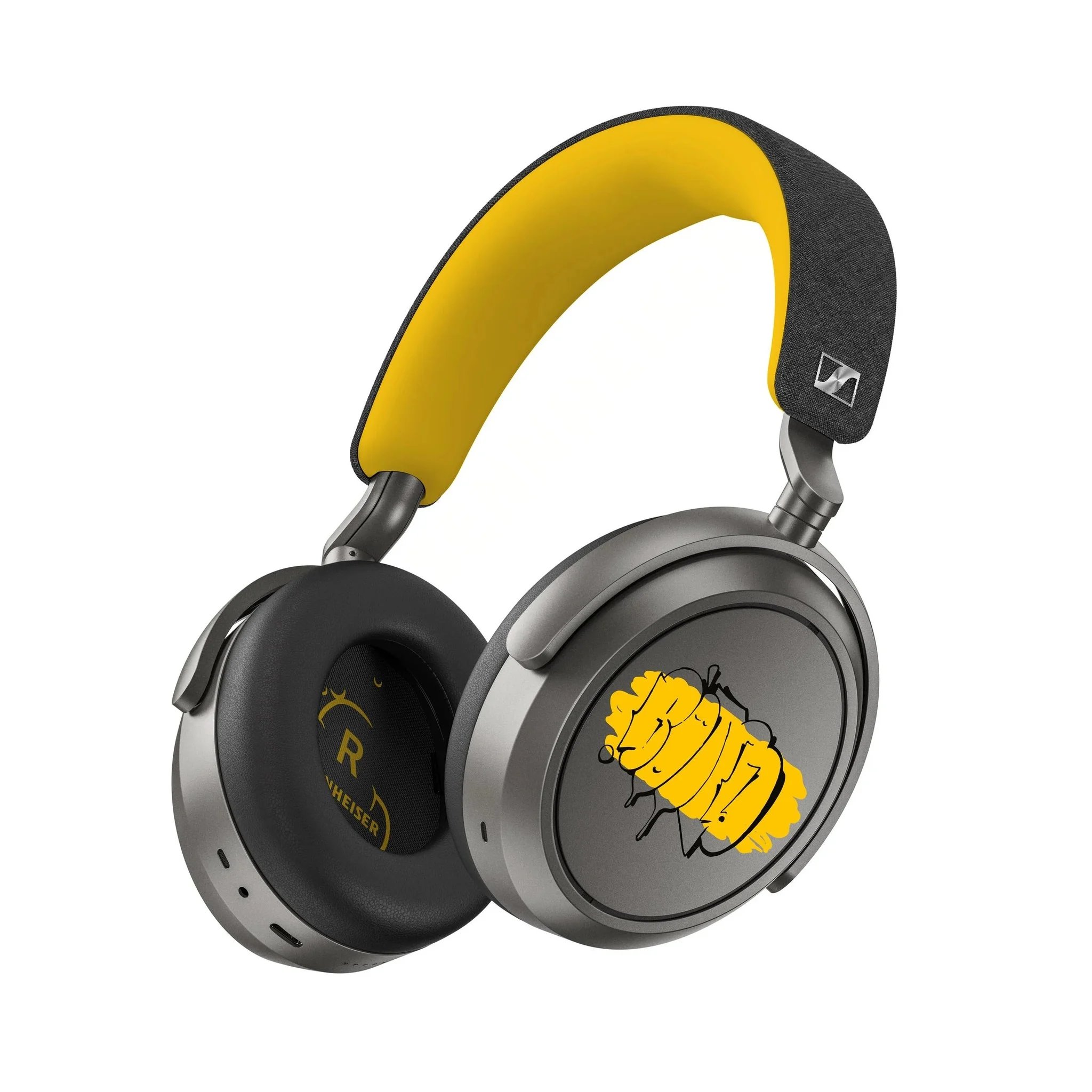
Momentum 4 Wireless 80th Anniversary Special Edition — £249.95
Best for: Daily commuting and travel; exceptional battery life over comfort.
The Momentum 4 is Sennheiser's consumer flagship. The 80th Anniversary edition adds nostalgic styling but the performance is identical to the standard version: 60-hour battery life (genuinely lasts 2+ weeks between charges), active noise cancellation, and Bluetooth 5.3 connectivity. Sound signature is warm and bass-forward — punchy for music, forgiving with streaming quality. Ear pads are soft memory foam; wearing them for 8+ hours causes some heat buildup on longer flights. The folding design and included carry case make it genuinely portable.
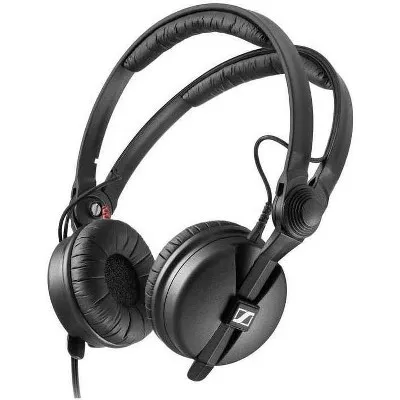
Sennheiser Professional HD 25 Plus On-Ear Monitor Headphones — £149.95
Best for: DJs, producers, or anyone needing accuracy over comfort; studio reference monitoring.
The HD 25 is the budget reference monitor. It's been the industry standard DJ headphone for 30 years because the sound is accurate across the frequency spectrum — no artificial bass boost or treble peak to flatter casual listening. On-ear design (not over-ear) means less isolation but better isolation paradoxically through direct ear coupling. Single-sided cable entry prevents tangling. Ear pads are replaceable pleather; they harden after 2-3 years of daily use but cost £15 to swap. Not comfortable for 12-hour sessions, but perfect for critical listening in 2-3 hour bursts.
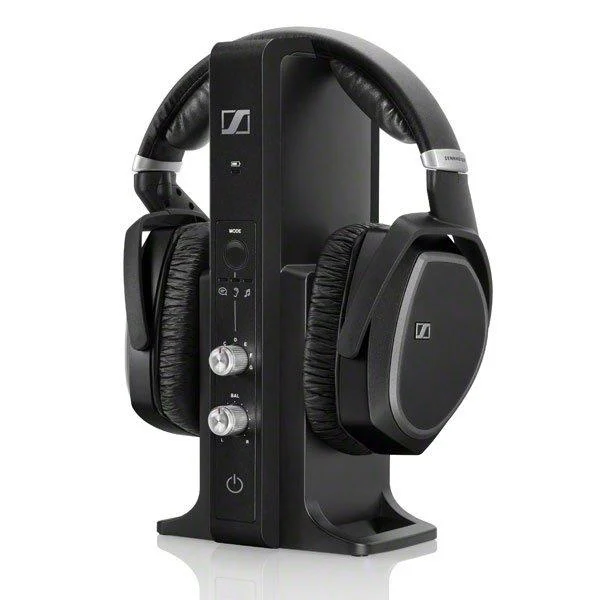
Sennheiser RS 195-U — £199.95
Best for: Home listening on a budget; wireless convenience without Bluetooth hassle.
The RS 195-U uses proprietary 2.4 GHz wireless (not Bluetooth) via a plug-in USB adapter, meaning no pairing hassles or connection dropouts. It's over-ear with a closed-back design, 17-hour battery per charge, and a charging dock. The trade-off: range is 100 metres line-of-sight (walls reduce this to 30 metres), and you're tethered to one room's USB dongle. Sound is pleasant but characterless — slight mid-range bloom, rolled-off treble. Best for films and podcasts, not music production.
Quick Comparison
| Product | Price | Best For | Standout Feature | |---|---|---|---| | Momentum 4 Wireless 80th Anniversary | £249.95 | Commuting; travel | 60-hour battery life | | HD 25 Plus | £149.95 | Studio monitoring; DJing | Flat frequency response; replaceable parts | | RS 195-U | £199.95 | Home listening; wireless without Bluetooth | Proprietary 2.4 GHz, no pairing required |
What to Look For
-
Frequency response: Sennheiser typically publishes accurate specs (e.g., HD 25: 12Hz–24kHz). Flat response (±3dB) means honest sound; boosted bass (common in consumer headphones) flatters poor-quality audio but masks detail. Check the technical sheet — vague "powerful bass" claims hide poor tuning.
-
Driver size: Larger drivers (40mm+) move more air but aren't automatically better. The HD 25's 40mm dynamic drivers are tuned for accuracy; the Momentum 4's 42mm drivers are tuned for warmth. Choose based on sound signature, not size alone.
-
Build materials: Sennheiser uses metal headbands and reinforced cables, not cheap plastic. The HD 25 uses a rigid metal headband; the Momentum 4 uses flexible plastic. Both last 5+ years, but the HD 25 feels more durable in hand.
-
Passive isolation: Over-ear closed-back headphones (Momentum 4, RS 195-U) isolate via seal; on-ear headphones (HD 25) don't isolate but leak sound. For commuting, sealed headphones reduce ambient noise by 15–20dB; on-ear cuts it by 5dB. Active noise cancellation (Momentum 4 only) adds another 10–15dB.
The Bottom Line
Buy the Momentum 4 Wireless at £249.95 if you commute regularly — the 60-hour battery and ANC justify the premium. If you need accuracy for mixing or DJing, the HD 25 Plus at £149.95 is the best value monitor headphone under £200. The RS 195-U at £199.95 suits home-only listeners who want wireless without Bluetooth connectivity hassles.
Frequently Asked Questions
Is Sennheiser good value for money?
Yes — Sennheiser's consumer headphones are priced competitively and built to last. The Momentum 4's 60-hour battery outlasts most rivals by 3–4x; the HD 25 costs £150 but sounds like a £300 monitor headphone because Sennheiser doesn't inflate specs. Their professional equipment justifies premium pricing, but the consumer range is genuinely fair value compared to Bose or Sony equivalents.
Which Sennheiser headphone has the best sound quality?
The HD 25 Plus has the most accurate sound — frequency response is flat ±2dB, which is studio-grade precision. However, "best" depends on use case: the Momentum 4 sounds more engaging for music (warm, bass-forward), while the HD 25 sounds more neutral for critical listening or mixing. For casual listening, the Momentum 4's warmer sound is more enjoyable; for production work, the HD 25's accuracy is essential.
Do Sennheiser headphones need special drivers or software?
No. All three models use standard audio codecs (Bluetooth SBC/AAC for wireless models) and plug-and-play USB connectivity. The RS 195-U includes a USB 2.4GHz dongle but requires no software installation — Windows and macOS detect it automatically. No proprietary apps or driver bloat.
Can I replace parts on Sennheiser headphones?
Yes — this is a Sennheiser strength. The HD 25 Plus has fully replaceable ear pads (£15), headband padding, and even the cable is user-replaceable. The Momentum 4's ear pads are also replaceable (£25). The RS 195-U's battery is not user-replaceable but Sennheiser offers repair services. Compared to competitors, Sennheiser actively supports long-term ownership rather than forcing replacement.