Which Saucony Running Shoes Should You Buy? A Breakdown of Their Best Current Models
Saucony's current range spans three distinct running shoes designed for different paces and priorities: the Kinvara 15 excels as a lightweight racer for tempo work, the Omni 22 delivers exceptional value as an everyday trainer, and the Hurricane 25 provides stability support for overpronators. Your choice depends on your running style—speed-focused runners should prioritise the Kinvara; daily mileage runners need the Omni; those requiring arch support should choose the Hurricane.
Why Saucony?
Founded in 1898 in Pennsylvania, Saucony has spent over 125 years refining running shoe technology. The brand specialises in biomechanically sound footwear, with a particular reputation for stability shoes and responsive cushioning. Unlike some competitors that chase trend-driven aesthetics, Saucony focuses on functional performance: they use proprietary foam compounds (like PWRRUN and PWRRUN+) and strategic platform geometry to address real runner problems—impact absorption, pronation control, and efficient energy return. Their current range reflects this philosophy: three models targeting distinct biomechanical needs rather than overlapping lifestyle variants.
Top Picks
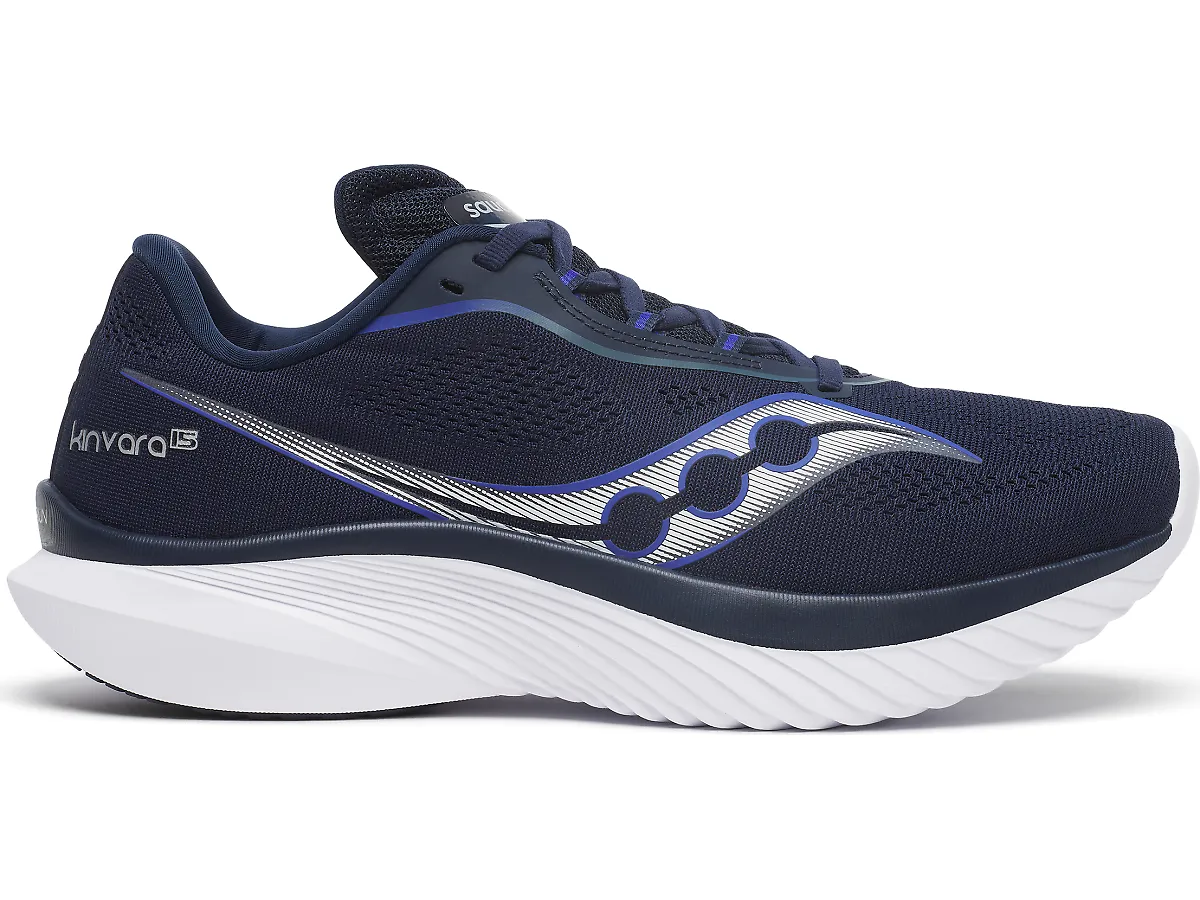
Saucony Kinvara 15 — £90.00
Best for runners seeking a lightweight, responsive shoe for faster-paced training and racing. The Kinvara 15 weighs just 170g (men's size 9) and sits on a 8mm drop platform, making it ideal for tempo runs, track work, and short-distance racing. The PWRRUN+ foam provides snappy energy return without excess bulk, and the minimal midsole encourages a more natural foot strike. If you want a racer that doubles as a daily trainer, this is it—though it sacrifices some cushioning comfort on very long easy runs.
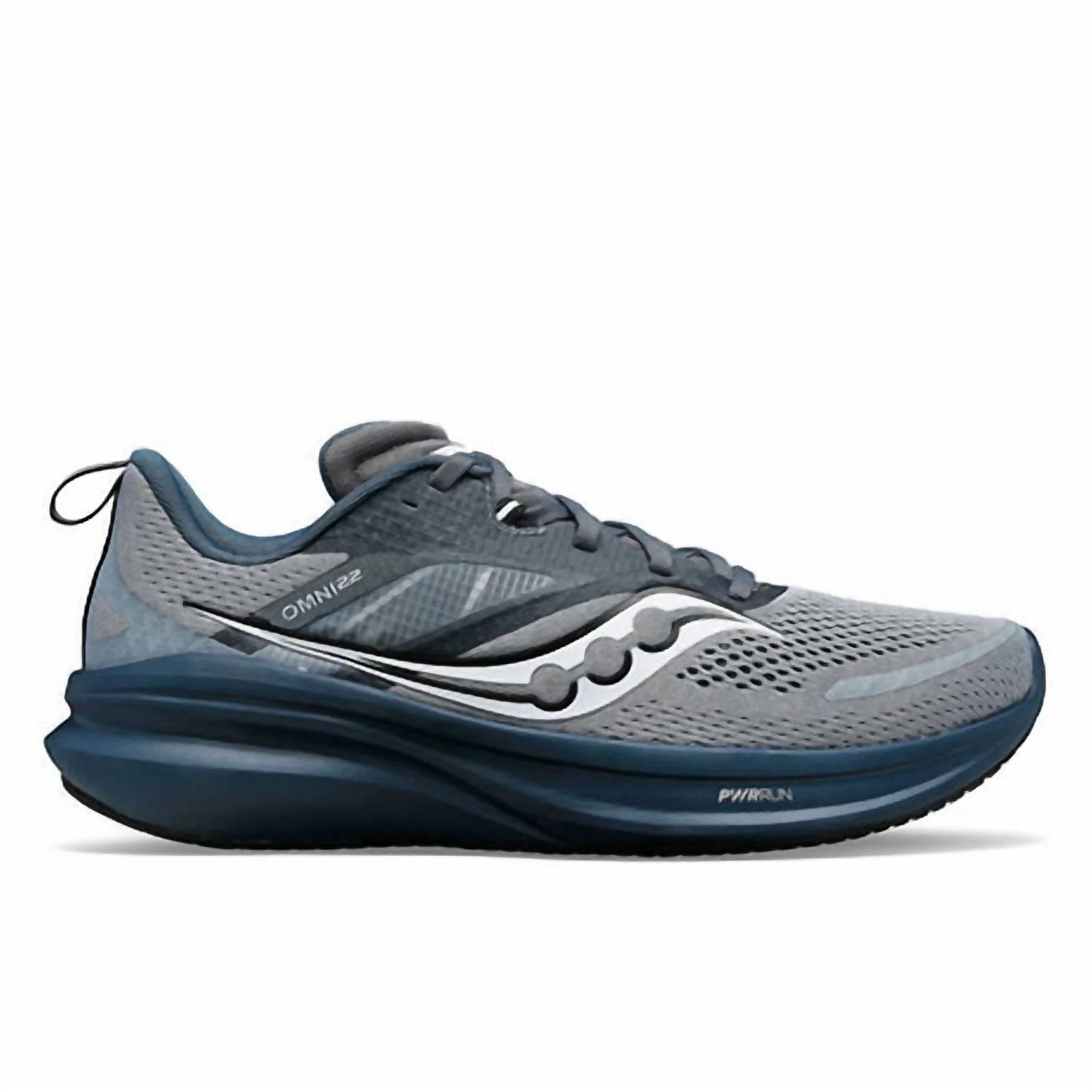
Saucony Men's Omni 22 — £29.95
Best for everyday running and value-conscious buyers who want a reliable workhorse. At just £29.95, the Omni 22 is an exceptional entry point into Saucony's lineup. It's a neutral daily trainer with balanced cushioning, making it suitable for a wide range of paces and distances. The Omni line has historically appealed to high-mileage runners, and this version maintains that reputation with adequate impact protection and durable construction. Use this for recovery runs, base-building weeks, and long slow distance if you're budget-conscious or building a multi-shoe rotation.
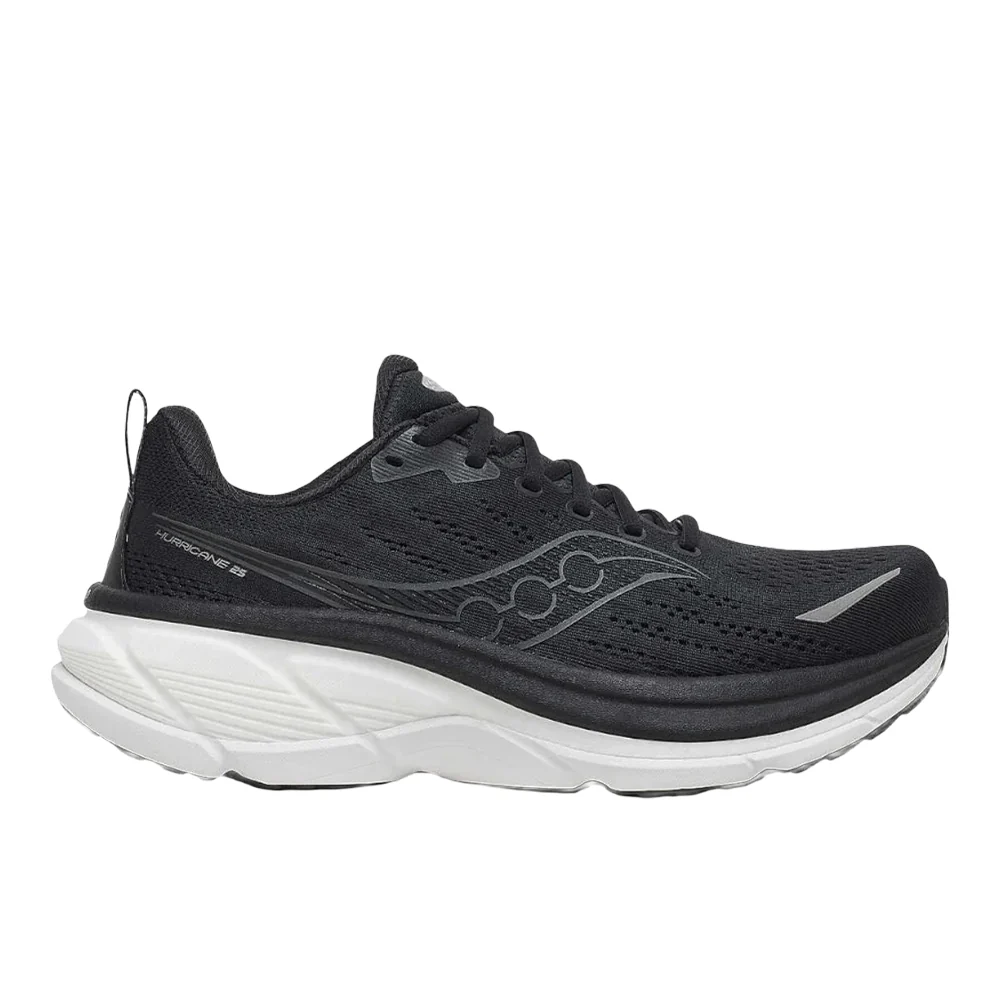
Saucony Hurricane 25 — £114.95
Best for overpronators and runners requiring medial support without excessive stiffness. The Hurricane 25 combines Saucony's PWRRUN cushioning with a structured guide rail system that reduces excessive inward roll without the rigid feeling of older stability shoes. At 10mm drop and 240g (men's size 9), it's heavier than the Kinvara but lighter than many competing stability trainers. This shoe works well for daily training across varied paces if pronation control is non-negotiable.
Quick Comparison
| Model | Price | Best For | Standout Feature | |---|---|---|---| | Kinvara 15 | £90.00 | Speed work & racing | 170g lightweight, 8mm drop, responsive foam | | Omni 22 | £29.95 | Daily training & value | Exceptional price point, balanced cushioning | | Hurricane 25 | £114.95 | Overpronation support | Guide rail stability, 240g workhorse trainer |
What to Look For
- Drop measurement: Kinvara (8mm) suits faster runners who prefer ground contact; Hurricane (10mm) offers moderate drop for versatility; Omni (standard drop, typically 10mm) balances comfort and responsiveness.
- Midsole weight: Lighter shoes (Kinvara at 170g) improve running economy for speed work; heavier shoes (Hurricane at 240g) provide durability and cushioning for high-mileage weeks.
- Pronation control: If you overpronate, only the Hurricane 25 includes structural support; Kinvara and Omni are neutral-only shoes.
- Price-to-durability ratio: The Omni 22's £29.95 price suggests end-of-season stock or clearance pricing; verify this isn't outdated inventory before purchasing. Standard durability for Saucony trainers is 300–500 miles before noticeable cushioning loss.
The Bottom Line
The Saucony Kinvara 15 at £90.00 is the standout pick for most runners because it balances speed-focused design with enough cushioning for everyday use—making it the most versatile choice. If budget is your primary concern, the Omni 22 at £29.95 is remarkable value for a daily trainer. Choose the Hurricane 25 only if you have documented overpronation; otherwise, you're paying extra for support you don't need.
Frequently Asked Questions
Is Saucony good value for money?
Yes, particularly at current prices. The Omni 22 at £29.95 is exceptional value for a daily trainer; the Kinvara 15 at £90 undercuts most comparable lightweight racers. Hurricane 25 at £114.95 is fairly priced for a structured stability shoe, though only necessary if you require arch support.
What's the difference between the Kinvara and Omni?
The Kinvara 15 is a lightweight racer (170g, minimal cushioning, 8mm drop) designed for speed; the Omni 22 is a general-purpose daily trainer with balanced cushioning and standard drop. Choose Kinvara for tempo work and races, Omni for easy runs and base-building.
Which Saucony shoe lasts the longest?
The Hurricane 25, at 240g, typically lasts 350–500 miles due to its heavier midsole and durable construction. The Kinvara 15's lighter platform means it may need replacement around 300–400 miles. The Omni 22 durability depends on running volume and surface; expect 300–450 miles for regular weekly mileage.
Are Saucony shoes good for flat feet?
The Kinvara 15 and Omni 22 are neutral shoes with no arch support; they're unsuitable for flat feet without insoles. The Hurricane 25's guide rail system provides mild support but isn't medically engineered for flat-foot correction. Consult a podiatrist before choosing if you have diagnosed flat feet.