KitchenAid excels at building durable kitchen appliances that blend performance with design, and their current lineup offers genuine value across cooking and prep categories—though you'll want to match the product to your actual needs rather than brand loyalty alone.
Why KitchenAid?
KitchenAid has manufactured kitchen equipment since 1919, building a reputation around the iconic stand mixer. Today, they've expanded into ranges, ovens, and small appliances while maintaining the same philosophy: robust construction and intuitive design. Their ranges use proprietary heating technology (Even-heat™ Hyper Elements and True Convection systems) that delivers more consistent results than budget competitors, and their products typically last 10–15 years with proper care. They're not the cheapest option, but the engineering justifies the premium—especially on their larger investments like slide-in ranges.
Top Picks
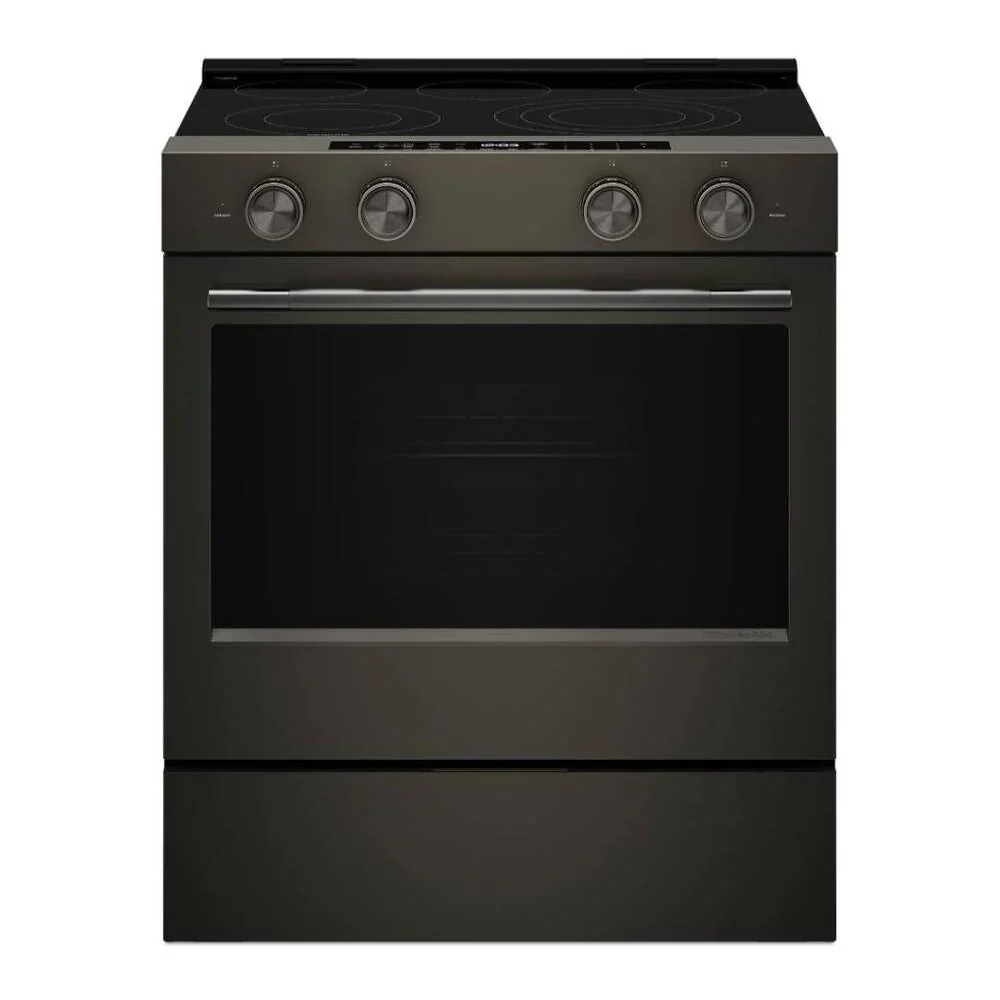
KitchenAid KSES530SBE Smart Slide-in Electric Range — £1,998
Best for: Cooks who want precision cooking and easy cleanup. This 30-inch model offers 5.3 cubic feet of capacity, dual True Convection modes, and two Even-heat Hyper Elements that maintain temperature within a narrow band. The slide-in design fits flush with countertops for a built-in look, and the Black Ore finish resists fingerprints. Smart connectivity lets you preheat remotely or monitor cooking from your phone—genuinely useful if you're juggling multiple dishes.
KitchenAid KSES530SJP Smart Slide-in Electric Range — £1,874.99
Best for: Budget-conscious renovators who won't sacrifice core features. Identical spec to the SBE (5.3 cu. ft., dual convection, smart controls) but available in a different finish—functionally equivalent if the stainless-steel-look finish suits your kitchen. Save £123 versus the Black Ore version and reinvest in supporting tools.
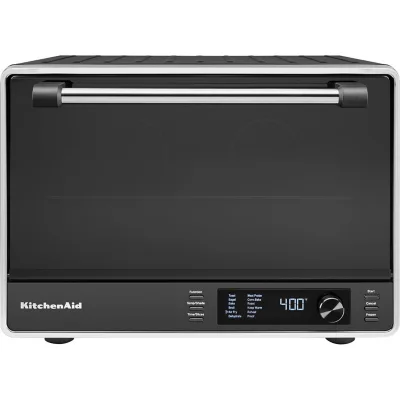
KitchenAid Dual Convection Countertop Oven — £269.95
Best for: Small-space cooks and secondary roasting. This compact unit delivers dual convection heating, air fry capability, and a built-in temperature probe—all rare features at this price point. At 16 x 20 inches, it sits on a worktop and frees your main oven for other tasks. Perfect for testing recipes or preparing sides without heating your kitchen.
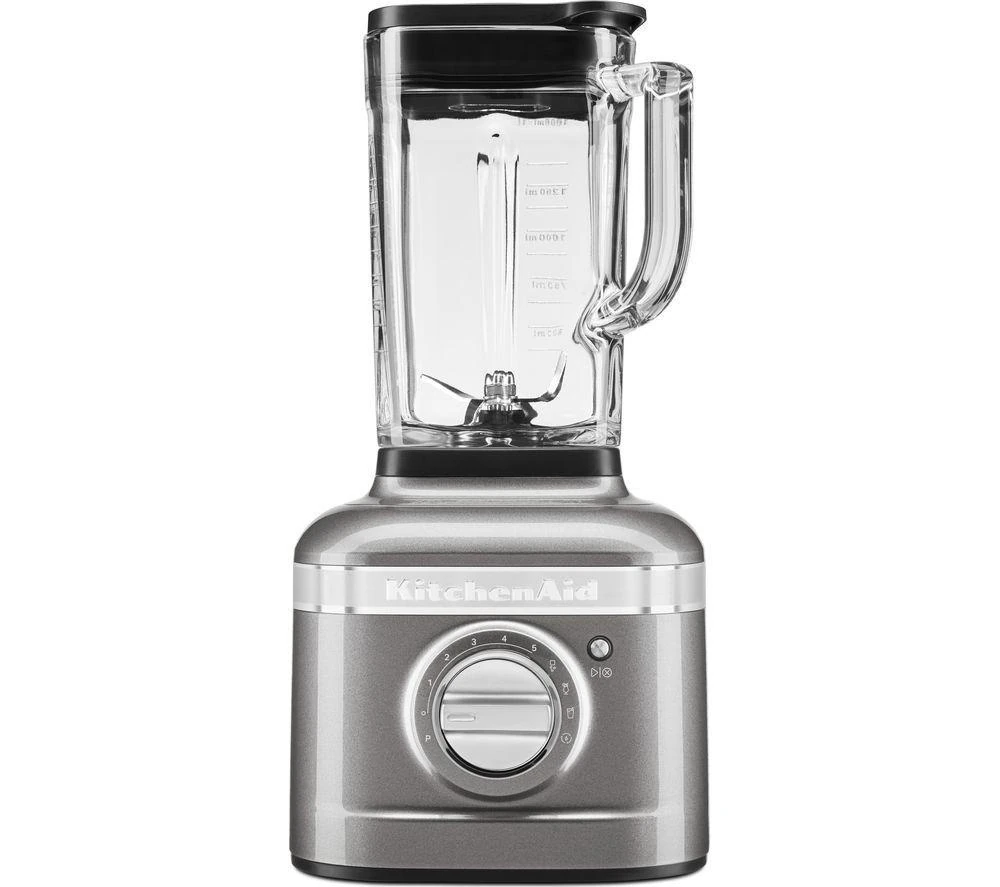
KitchenAid Artisan Medallion Silver K400 Blender — £279.90
Best for: Smoothie makers and sauce purees who value silence and consistency. The K400 uses a 1,575-watt motor and premium blade design to process hot and cold ingredients smoothly. Quieter than budget blenders, built to last, and the 1.75-litre pitcher handles medium batch work comfortably.
Quick Comparison
| Product | Price | Best For | Standout Feature | |---------|-------|----------|------------------| | KSES530SBE Range | £1,998 | Full kitchen cooking | Smart remote control + Black Ore finish | | KSES530SJP Range | £1,874.99 | Same capability, lower spend | Identical spec to SBE, different finish | | Dual Convection Oven | £269.95 | Compact spaces + secondary cooking | Air fry + temperature probe included | | Artisan K400 Blender | £279.90 | Smooth purees + longevity | 1,575W motor + quiet operation |
What to Look For
- Even-heat Technology: KitchenAid's ranges use dual heating elements and True Convection fans to circulate heat at 300+ revolutions per minute, reducing hot spots. Standard coil or smooth-top ranges don't offer this level of temperature consistency.
- Capacity vs. Space: The 5.3 cubic feet on both slide-in ranges is substantially larger than average (most standard ranges are 4.5–5.0 cu. ft.), but requires proper cabinet cutout. Verify your cabinet dimensions before ordering.
- Smart Connectivity: Both ranges offer phone control and alerts, but only if your kitchen has WiFi. Check signal strength before committing; dead zones will render this feature useless.
- Motor Power: The K400 blender's 1,575-watt motor is 30% more powerful than typical food blenders (1,000–1,200W), meaning it processes fibrous vegetables and frozen fruit faster and quieter. Look for wattage specs; higher power = fewer blend cycles needed.
The Bottom Line
Buy the KitchenAid KSES530SBE Range at £1,998 if you're planning a full kitchen renovation—the smart controls, dual convection, and 5.3-cubic-foot capacity justify the investment over a decade of cooking. For tighter budgets, the £269.95 countertop oven pairs excellently with an existing range and handles 80% of secondary cooking tasks without taking up permanent space. Skip premium features only if your cooking rarely demands them; KitchenAid's true strength is durability, not unnecessary tech.
Frequently Asked Questions
Is KitchenAid worth the money compared to budget brands?
Yes, if you use your appliances daily. KitchenAid ranges and blenders last 10–15 years versus 5–8 for budget competitors, and the precision heating (Even-heat Hyper Elements) reduces undercooked or burnt spots. Budget brands save £300–600 upfront but cost more per year of use over a decade.
Can I fit a KitchenAid slide-in range into my existing kitchen?
Maybe—verify cabinet dimensions first. The KSES530 models require a 30-inch opening, 36 inches of height, and 24.5 inches of depth. If your current range is standard size, it will fit, but older kitchens or custom layouts may need cabinet modifications (£200–500 additional cost).
Does the countertop oven actually air fry well, or is it just a gimmick?
It works genuinely well for home cooks. The dual convection fans circulate air at 300+ rpm, creating the Maillard reaction needed for crispy results—not perfect compared to dedicated air fryers, but more than adequate for small batches of chips, wings, or tofu. Capacity is smaller (fits 2–3 chicken breasts), so it's secondary, not primary equipment.
Which KitchenAid blender should I buy if I only make smoothies occasionally?
The K400 Artisan is overkill for occasional use; a £100–150 competitor will handle weekly smoothies. Choose the K400 only if you blend hot soups, grind grains, or make nut butters—tasks that demand sustained motor power and durability. For frozen fruit and yogurt only, save the £130 premium.