Which Jura Automatic Coffee Machine Should You Buy? E4, E6, or E8?
Jura's automatic espresso machines are purpose-built to eliminate the learning curve of manual brewing. The E4, E6, and E8 all deliver consistent, pressure-optimised shots without requiring grind adjustment or tamping skills — but they differ significantly in grinder quality, drink range, and touch controls.
Why Jura?
Jura, founded in 1924 as a Swiss watchmaker, shifted to precision coffee engineering in 1968. They're known for integrating grinder and espresso pump into a single sealed unit, which means fewer parts to fail and more stable temperature control. Unlike pod machines, Jura uses whole beans, giving you flexibility on roast and origin. Their E-series specifically targets home users willing to invest £1,400–£2,400 for machines that match café consistency without daily maintenance.
Key differentiator: Jura's proprietary pulse extraction technology (PEP) adjusts pressure micro-adjustments during the shot, mimicking a skilled barista's hand movements. This is baked into all three models here.
Top Picks
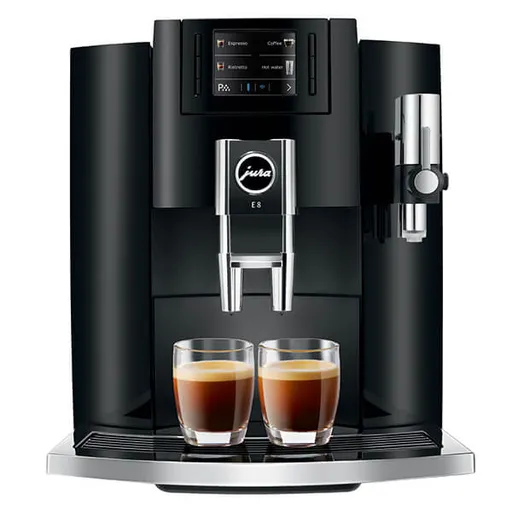
Jura E8 Piano Black Automatic Coffee Machine — £2,399
Best for espresso perfectionists and households serving 6+ daily drinks. The E8 features dual heating elements (simultaneous espresso and steam), a 15-bar pump, and a 110mm conical grinder with 40 customisable settings. Touch display with 12 user profiles means family members can save personal preferences. Milk frother is fully automated with three texture settings. Verdict: Most feature-complete; justifiable only if you're replacing a café habit or entertaining regularly.
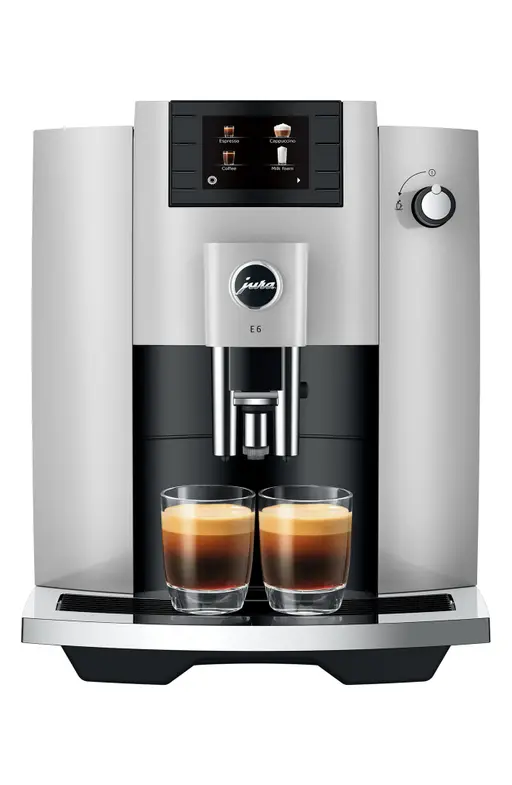
Jura E6 Automatic Coffee Machine — £1,399
Best for daily drinkers who want quality without the learning curve. The E6 uses a 14-bar pump, single heating element, and an 85mm conical grinder with 20 settings. Built-in milk system with two froth intensity levels. Simpler 4-button interface than the E8, but no touch screen or dual heating. Verdict: Sweet spot for home use; covers espresso, cappuccino, flat white, and ristretto without compromise.
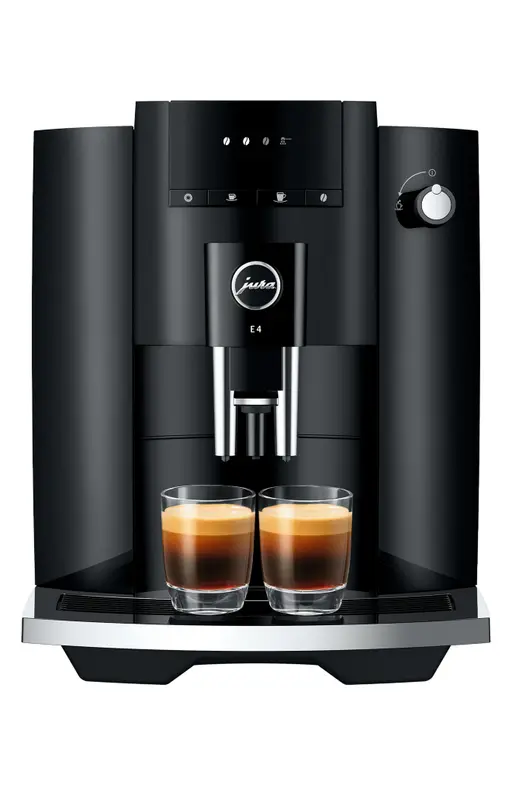
Jura E4 Automatic Coffee Machine — £1,499
Best for small kitchens or espresso-only drinkers. Despite its mid-range price, the E4 is actually the most compact (only 150mm wide) and focuses on single-shot quality over milk drinks. 14-bar pump, 70mm burr grinder with 15 settings, and manual steam wand (you control milk texture). No automated cappuccino button; suited to people who want control or only drink long blacks. Verdict: Paradoxically pricier than E6 due to scarcity; skip unless space is critical.
Quick Comparison
| Model | Price | Best For | Standout Feature | |-------|-------|----------|------------------| | E8 Piano Black | £2,399 | Dual-user households, café replacement | Dual heating elements, touch screen, 40 grind settings | | E6 | £1,399 | Daily home use, all drink types | Balanced features at fair price, 20 grind settings, automated milk | | E4 | £1,499 | Small spaces, espresso focus | Most compact (150mm), 15 grind settings, manual steam wand |
What to Look For
-
Grinder quality: Conical burrs (all three have them) maintain bean flavour better than flat burrs. Jura's 110mm (E8) > 85mm (E6) > 70mm (E4) correlates to finer, more consistent grounds under pressure. If you drink daily, the extra £1,000 for the E8's larger grinder is worth it; the E6 is adequate for 2–3 drinks daily.
-
Heating speed: Single-element machines (E6, E4) take 45 seconds from cold. The E8's dual elements cut this to 20 seconds and eliminate the wait between espresso and steaming milk. Matters only if you're making multiple drinks back-to-back.
-
Customisation range: Grind settings (15–40 options), shot volume (25–250ml), and temperature control vary. More settings = finer tuning, but default presets are competent for all three. The E6's 20 settings are genuinely sufficient for light, medium, and dark roasts.
-
Milk system: The E8 and E6 automate milk frothing via internal steam nozzles. The E4 requires manual steam wand operation. If cappuccinos are daily drinks, avoid the E4 unless you enjoy milk technique.
The Bottom Line
Buy the Jura E6 at £1,399 unless you have £2,400 to spare and regularly serve 6+ milk-based drinks daily. The E6 delivers 90% of the E8's quality at 58% of the cost, with sufficient grind control and a reliable automated milk system. Skip the E4 — its £1,499 price undercuts the E6 by only £100 while removing features; it's designed for a niche that barely exists in the UK market.
Frequently Asked Questions
Is Jura good value for money?
Jura machines cost 2–3× more than entry-level Gaggia or DeLonghi models, but they'll outlast them by 8–10 years without descaling or grinder jams. If you'd otherwise spend £150/month on café visits, a Jura pays for itself in 10–16 months. Verdict: excellent value for daily drinkers; poor value for occasional users.
How often do Jura machines need servicing?
Jura's sealed brewing chamber needs no internal descaling (filtration happens pre-chamber). You'll descale the water system annually using Jura's proprietary tablets (£8–12 per box). The grinder is maintenance-free; no brushing required. Compare this to manual espresso machines that need backflushing every 2–3 days.
Can you use pre-ground coffee or third-party beans?
All three models use only whole beans; the grinder is integral, not removable. You can buy any beans (specialty roasters, supermarket, single-origin) and adjust grind settings. You cannot use pre-ground coffee or pods.
Which Jura model lasts longest?
All three have 5-year warranties covering pump, heating element, and grinder. Real-world lifespan is 8–12 years with annual descaling and bean-hopper cleaning. The E8's dual heating element is marginally more stress-prone than the E6's single element, but the difference is negligible. Failure rates are <3% across all E-series models within 10 years of purchase.